

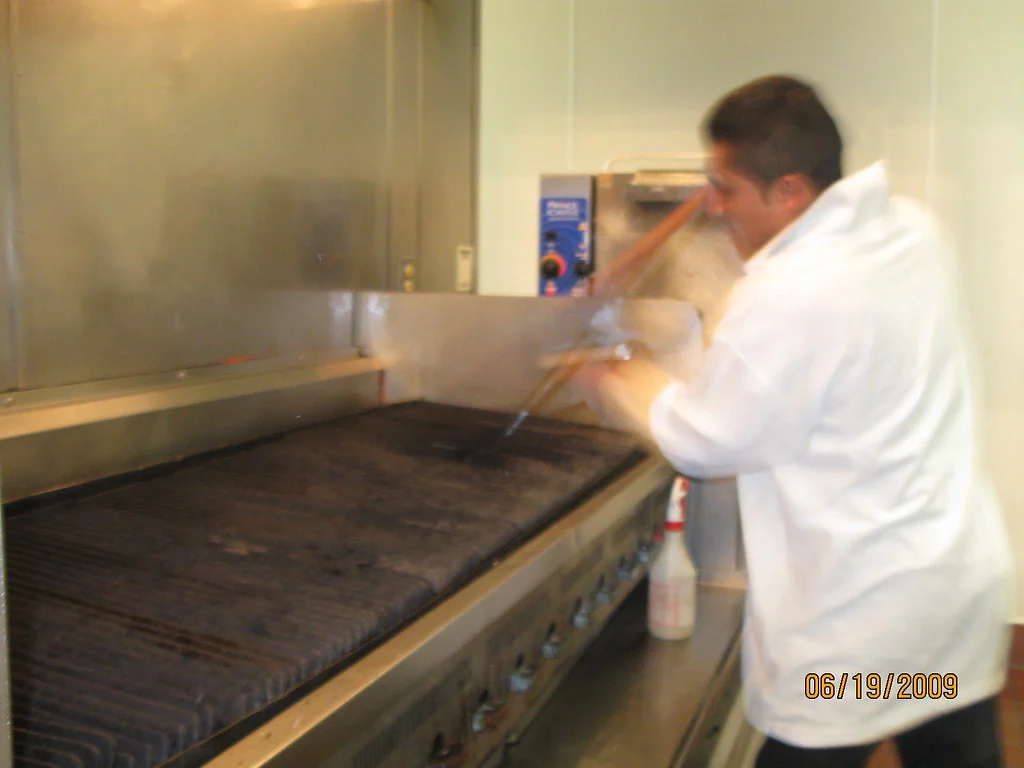
 Photo by Frederick Md Publicity via Flickr (CC BY 2.0)
The cleaning collective agreement in France (CCN des entreprises de propreté et services associés, IDCC 3043) is the reference text for all companies whose principal activity is the cleaning and maintenance of premises. For operations managers and HR teams coordinating agents across multiple client sites, this agreement sets precise rules: working time organisation, atypical shift patterns, part-time contracts and the transfer of employees when cleaning contracts change hands. Understanding these provisions is essential for building compliant schedules and anticipating the sector’s specific employment obligations.
The French cleaning collective agreement (IDCC 3043): scope and covered companies
The cleaning collective agreement covers companies whose main activity is the cleaning of premises, surfaces and equipment: offices, retail outlets, industrial facilities, hotels, hospitals, transport infrastructure and public spaces. IDCC 3043 is distinct from the collective agreements covering personal services or integrated facilities management, which follow separate texts.
The agreement defines a classification structure that determines applicable minimum pay scales and specific employment conditions for each category.
| Category | Key characteristics |
|---|---|
| Service agent (AS) | General cleaning tasks, part-time contracts very common |
| Qualified service agent (AQS) | Specialised techniques, specific machinery operation |
| Team leader | Operational supervision across one or several sites |
| Site supervisor (agent de maîtrise) | Team coordination, client relations across a sector |
| Manager | Operations management, multi-client or multi-sector oversight |
Cleaning companies providing services in regulated sectors (healthcare, food processing, nuclear) may face additional requirements imposed by their clients’ own agreements, but IDCC 3043 remains the governing text for their employment relationships with their own staff.
Atypical shifts and night work: how the French cleaning sector is organised
The defining feature of the cleaning sector is that most work is performed outside normal occupancy hours. Agents work early in the morning before offices and shops open, during midday breaks in catering facilities, or in the evenings and overnight in retail stores, airports, transport hubs and industrial plants.
The French cleaning collective agreement governs night work, conventionally defined as the period between 21:00 and 06:00. Employees who regularly perform part of their working time within this window acquire the status of night workers and benefit from specific protective provisions: enhanced medical monitoring, compensatory rest or pay supplements, and restrictions on maximum nightly working hours.
For schedule building, these atypical slots create precise constraints. An agent working from 06:00 to 08:00 and again from 18:00 to 20:00 must still benefit from the mandatory 11-hour consecutive rest period between two working periods. Daily amplitude limits also apply. These rules must be checked for each employee, particularly those deployed across several sites whose shifts combine in ways that can compress rest time.
Annexe 7: mandatory employee transfer when a cleaning contract changes hands
Annexe 7 of the French cleaning collective agreement is a provision with no equivalent in most other French industry branches. It organises the continued employment of agents when a cleaning contract moves from one service provider to another.
In practice, when a client decides to switch cleaning company, the employees of the outgoing provider who perform a significant share of their working time on that contract must be taken on by the incoming company. This mandatory transfer preserves each employee’s seniority and pay conditions: the new employer cannot offer terms below those the employee enjoyed with the previous provider.
For HR and operations managers, annexe 7 has direct implications in both directions. When winning a new contract, the incoming company must identify transferable employees, incorporate their pay levels and seniority into cost projections, and plan their integration into existing schedules from the handover date. When losing a contract, the transfer procedure requires providing the incoming company with the required information about concerned agents within the timelines set by the agreement.
Non-application of annexe 7 exposes the company to employment tribunal claims and sanctions. The most common disputes concern determining which employees meet the affectation threshold triggering the transfer obligation, and the scope of pay conditions that must be preserved.
Part-time work and complementary hours in French cleaning companies
Part-time employment is structurally dominant in the cleaning sector. Many service agents hold short contracts covering just a few hours per week, corresponding to a single shift at one client. This contractual fragmentation is an organisational feature of the sector that allows precise matching of labour hours to client requirements.
Part-time employees may work complementary hours, meaning hours beyond their contractual duration that do not reach the legal 35-hour threshold. The rules governing these hours are precise and must be monitored carefully:
- Up to one tenth of the contractual duration, complementary hours attract the applicable supplement rate (generally 10%).
- Beyond this first threshold, complementary hours are paid at 25% above the standard rate.
- The total volume of complementary hours cannot exceed one third of the contractual duration or bring the employee to the 35-hour legal threshold.
With many part-time agents across multiple sites, the accumulation of a few extra hours here and there can quickly generate pay supplement obligations or trigger a reclassification to full-time status, with significant consequences for the employee’s rights. Individual real-time tracking is essential to prevent these situations before they arise.
Working time modulation in the cleaning sector
Cleaning companies face fluctuating activity levels tied to client closures, seasonal patterns, renovation works or event-related peaks. Working time modulation allows these variations to be absorbed without triggering overtime at every weekly excess.
Implementing modulation requires a collective agreement at company or branch level. This agreement must define the reference period (up to 12 months), minimum and maximum weekly hours, and the conditions under which overtime is calculated at the end of the period. During the modulation cycle, quiet weeks offset busy ones without every exceedance of 35 hours automatically generating overtime supplements.
At the end of the reference period, hours worked beyond the annualised ceiling constitute overtime subject to the applicable legal and contractual rates. Continuous individual time tracking throughout the period is necessary to anticipate overruns and avoid year-end surprises.
Multi-site scheduling: managing cleaning agents across several client sites
Multi-site deployment is a daily reality in the cleaning sector. A single agent may work at two, three or more different clients in the same day or across the same week. This arrangement is economically rational for cleaning companies but generates scheduling complexity that generic planning tools handle poorly.
Travel time between two consecutive client sites constitutes effective working time. It adds to the duration of each shift and can push agents past maximum daily working hours or reduce the mandatory rest period between working periods. These travel times must be identified, recorded and integrated into schedules at the planning stage, not discovered after the fact.
Skello, built for multi-site field teams, allows operations managers to build and distribute schedules with real-time visibility over each agent’s individual time counters. Configurable alerts flag approaching limits before they are breached, and automated payroll export reduces manual re-entry and calculation errors.
For cleaning companies that manage agent training on specific competencies, machine operation, hygiene protocols, certifications required by regulated clients, Empowill provides talent management and training tracking modules useful for maintaining qualifications across geographically dispersed teams.
Other sectors facing similar multi-site scheduling and atypical shift challenges deal with comparable issues. The fast-food collective agreement shares the constraints of part-time contracts and flexible scheduling on rotating teams. The construction collective agreement addresses the challenges of field teams deployed across multiple sites with variable working hours. The hairdressing collective agreement presents similar issues on managing shift patterns and complementary hours for part-time staff. The metallurgy collective agreement illustrates the complexity of modulation and overtime management in multi-shift environments.
Frequently asked questions
What is annexe 7 of the French cleaning collective agreement?
Annexe 7 of the French cleaning collective agreement is a job protection clause: when a cleaning contract changes hands, employees who perform a significant share of their working time on that contract must be taken on by the incoming company, with their seniority and pay conditions preserved. For the incoming employer, this obligation means factoring transferable employees into pricing projections and integrating their existing terms from day one.
Can cleaning agents work across several client sites in a single day?
Yes, multi-site deployment is standard practice in the sector. A single agent may work at two, three or even more client sites in succession during the same day. Travel time between consecutive assignments is considered effective working time and must be recorded as such. Schedules must account for these journeys to avoid breaching maximum daily or weekly working time limits.
How are atypical shift patterns handled under the French cleaning collective agreement?
The French cleaning collective agreement covers the atypical hours inherent to the sector: early morning slots before premises open, evening shifts after closing time, and overnight work in industrial or transport facilities. Night work, generally defined as the period between 21:00 and 06:00, entitles eligible employees to specific contractual supplements. Employers must accurately identify which shifts fall within this window to calculate pay correctly.
Is working time modulation possible in the French cleaning sector?
Yes, working time modulation can be applied in the cleaning sector through a company-level or branch-level collective agreement. It allows weekly hours to vary over a reference period of up to 12 months without triggering overtime at every weekly excess, provided the average duration stays within legal limits. Overtime is calculated at the end of the reference period rather than week by week.
What rules apply to complementary hours for part-time cleaning employees in France?
Part-time employees can work complementary hours beyond their contractual duration. Up to one tenth of contractual hours, these attract the applicable supplement rate (generally 10%). Beyond that threshold, complementary hours are paid at 25% above the standard rate. The total volume of complementary hours cannot exceed one third of the contractual duration or bring the employee to the legal 35-hour threshold.