

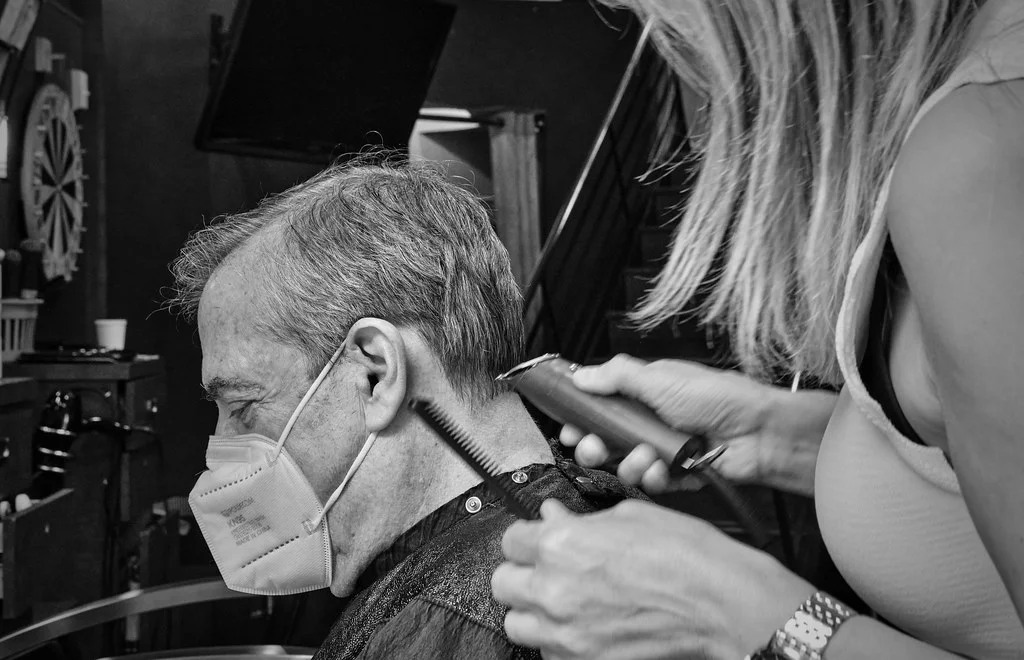
 Photo par susanjanegolding via Flickr (CC BY 2.0)
The hairdressing collective agreement (IDCC 2596) sets the employment rules applicable to hairdressing salons, combined hair and beauty establishments, and mobile hairdressing businesses in France. For a salon owner or HR manager, understanding its working time provisions is essential: schedule construction, overtime management, peak-season staffing and Saturday working are all governed by specific rules that in some respects depart from general employment law and require careful application to avoid compliance risks during a labour inspection.
Scope of the French hairdressing collective agreement
The national hairdressing collective agreement, stemming from the framework accord of 10 July 2006 extended by ministerial order, covers all companies whose primary economic activity is classified under NAF code 9602A: ladies’, men’s and mixed hairdressing salons, mobile hairdressing services, and establishments combining hairdressing and beauty treatment where hairdressing constitutes the main activity.
The first step for any salon owner is to verify the APE/NAF code on the company’s registration document (Kbis). In the case of a combined hairdressing and beauty business, it is the primary economic activity that determines the applicable agreement: either the hairdressing collective agreement (IDCC 2596) or, in other cases, the collective agreement for beauty institutes. Misclassification creates legal exposure on minimum wages, professional classifications and scheduling rules, particularly in the event of an inspection.
Part-time employment is structurally widespread in the hairdressing sector. Part-time contracts are subject to specific rules on additional hours, notice periods and schedule modification, layered on top of the general collective framework. Our sector-by-sector HRIS by industry overview covers tools adapted to small structures with mixed-contract teams.
Working time and overtime in hairdressing salons
The statutory working week of 35 hours applies to hairdressing salons as it does to all employers in France, regardless of establishment size. Hours worked beyond this threshold are overtime hours, subject to statutory premiums or, where a collective agreement so provides, compensation through replacement rest.
The statutory overtime premium rates, applicable in the absence of more favourable collective provisions, are as follows:
- From the 36th to the 43rd hour inclusive: 25% premium.
- From the 44th hour onwards: 50% premium.
The annual overtime quota is set at 220 hours per employee per year, unless a company-level collective agreement establishes a different quota. Beyond this threshold, each additional overtime hour triggers a mandatory compensatory rest entitlement on top of the overtime premium.
In a hairdressing salon, demand peaks are predictable and recurring: the Christmas and New Year period, school holidays, and the wedding season running from April through July. For establishments that bring in additional staff during these periods, real-time tracking of individual overtime counters throughout the year prevents quota breaches going unnoticed until year-end.
Annual working time modulation: managing seasonal peaks
Working time modulation is particularly suited to hairdressing salons, whose activity shows cyclical variation driven by the calendar and seasonal patterns. This arrangement allows the employer to vary the weekly working duration over a reference period of up to one year, without triggering weekly overtime calculations.
In practice, high-demand weeks (Christmas, school holidays, wedding season) may exceed 35 hours, offset by quieter weeks in January or early September. Overtime is only counted at the end of the reference period, based on the total hours worked relative to the annual target.
Setting up modulation requires a written collective agreement: a company-level or establishment-level agreement, or a branch-level provision within the hairdressing collective agreement. The employer must communicate an indicative schedule to employees at the start of the period and give them sufficient notice of any planning change. Individual reconciliation at the end of the period is mandatory. Hours exceeding the annual ceiling are treated as overtime and attract the applicable premium.
For independent salon owners, checking whether the hairdressing collective agreement or a branch accord already provides a modulation framework that does not require a separate company agreement is an essential first step.
Scheduling and duty rosters: practical obligations
Building a compliant schedule in a hairdressing salon involves several rules that directly determine the legality of the duty roster and protect the employer in the event of a dispute.
| Rule | Threshold or notice | Consequence of non-compliance |
|---|---|---|
| Daily rest | 11 consecutive hours minimum | Public order rule, no derogation possible |
| Weekly rest | 35 consecutive hours minimum | Statutory obligation |
| Overtime premium (tier 1) | From the 36th to 43rd hour: +25% | Salary arrears |
| Overtime premium (tier 2) | From the 44th hour: +50% | Salary arrears |
| Statutory break | 20 min after 6 h of effective work | Public order, non-negotiable |
| Modulation notice | Per agreement (typically 7 working days) | Possible schedule dispute |
| Additional hours (part-time) | Capped at one third of contracted hours | Risk of reclassification as full-time |
The duty roster must be posted or communicated to employees within the prescribed time limits. For part-time employees, who represent a significant proportion of the sector’s workforce, the contract must specify the distribution of hours across the working week. Any change to that distribution requires advance notice, except in urgent situations defined by the applicable provisions.
Scheduling software calibrated to the hairdressing collective agreement rules, such as Skello, automatically flags anomalies before the roster is finalised: exceeded daily amplitude, insufficient daily rest, overtime thresholds reached. For salons managing several roles or rotating teams, this automation materially reduces the risk of error and facilitates compliance checks.
Schedule management is directly linked to payroll: improperly tracked overtime ends up in pay slips. Payroll software connected to the planning tool eliminates manual re-entry and calculation errors on overtime premiums. For centralised tracking of individual time counters, time tracking software provides a real-time view across the full reference period.
Daily rest, weekly rest and Saturday working
The 11-hour consecutive daily rest period between two working days is a statutory minimum of public order. No company or branch agreement can derogate from it. In salons that close late on Friday evenings or at the end of Saturday, this rule directly constrains the start time for the following morning’s shift.
The minimum weekly rest is 35 consecutive hours: 24 hours of weekly rest plus the 11-hour daily rest. In the vast majority of salons, Sunday is a rest day and forms the fixed component of weekly rest. A second rest day is granted during the working week, most commonly Monday, depending on the establishment’s organisation.
Saturday is the busiest day in virtually every hairdressing salon. It is a standard working day: it carries no automatic premium simply for falling on a Saturday, unless specific collective or company provisions apply. Only weekly hours exceeding 35 trigger overtime premiums. Saturday scheduling, often continuous with reinforced staffing, is a central parameter of salon HR management.
For salon owners wishing to support employee skills development and annual review processes, Empowill offers a talent management and training module suited to small structures, useful for organising career conversations and development pathways within a salon team.
Public holidays and absence management in hairdressing
1 May is the only public holiday that must be a paid day off for all employees by law, regardless of sector or collective agreement. Hairdressing salons must close on this day or grant their teams this paid rest.
For the ten other statutory public holidays, the hairdressing collective agreement and any applicable company agreements define the compensation owed to employees working those days: salary premium or compensatory rest, depending on the provisions in force at the establishment. The year-end period combines the salon’s most intense trading days with several closely spaced public holidays (Christmas, New Year), requiring precise advance planning to meet both legal obligations and operational needs simultaneously.
Correct recording of compensation for public holidays worked is a standard audit point during labour inspections, especially in establishments with dense opening calendars. The restaurant collective agreement and the fast-food collective agreement present similar challenges for sectors with high activity on public holidays and can serve as comparative reference points for salon owners looking to strengthen their scheduling practices.
Frequently asked questions
Which companies are covered by the French hairdressing collective agreement?
The hairdressing collective agreement (IDCC 2596) applies to companies whose main activity falls under NAF code 9602A: ladies', men's and mixed hairdressing salons, mobile hairdressing, and combined hairdressing-beauty establishments where hairdressing is the primary activity. Coverage is determined by the APE/NAF code on the company registration document. Misclassification creates risks on minimum wages, job classifications and scheduling rules, particularly in the event of a labour inspection.
How does annual working time modulation work in a hairdressing salon?
Modulation allows weekly working hours to vary over a reference period of up to one year, without triggering overtime calculations on a weekly basis. Busy weeks (Christmas, school holidays, wedding season) offset quieter weeks in January or early autumn. Overtime is only calculated at the end of the reference period. Implementation requires a written collective agreement, and employees must be informed of the indicative schedule at the start of the period, with adequate notice of any changes.
Is Saturday work subject to a premium in French hairdressing salons?
Saturday is a standard working day in hairdressing salons and carries no automatic premium simply because it falls on a Saturday, unless specific collective or company agreements provide otherwise. Only hours worked beyond the statutory 35-hour weekly limit trigger overtime premiums. Salons typically grant a weekday rest day to offset Saturday working, and the weekly schedule must be built accordingly to remain compliant.
What is the minimum rest break entitlement in a hairdressing salon?
French law requires a consecutive rest break of at least 20 minutes after six hours of effective working time. This rule is a matter of public order and cannot be reduced by any agreement. On busy Saturdays with no service interruption, the break must be taken before the six-hour threshold is reached, not at the end of the day. The employer is responsible for organising the break so that it is actually taken.
How should public holidays be managed in salon scheduling?
1 May is the only public holiday that must legally be a paid rest day for all employees. For the other ten statutory public holidays, the hairdressing collective agreement and any applicable company agreements define the compensation owed to employees who work those days: salary premium or compensatory rest according to the provisions in force. The year-end period, which combines the busiest trading days with several closely spaced public holidays, requires precise advance planning.
What rules apply to part-time employees in hairdressing?
Part-time contracts are very common in hairdressing. The contract must specify the distribution of hours across the working week and the rules governing schedule changes. Additional hours are capped at one third of the contracted hours, unless a collective agreement sets a different ceiling. Any change to the agreed schedule requires advance notice. Regularly exceeding the one-tenth threshold for additional hours may entitle the employee to request a contract amendment increasing their contracted hours.