

In short:
- The ideal HRIS varies significantly by industry, especially for workforce management.
- Retail, hospitality, healthcare and manufacturing have specific scheduling constraints.
- Industry-specific HRIS reduce setup by 30 to 60% versus a generalist solution.
- Multi-business groups often prefer a finely tuned generalist HRIS.
Why HRIS depends on industry
Choosing an HRIS is not just about comparing features. Each industry imposes its own constraints: collective agreements, organizational models, business vocabulary, scheduling rules. A generalist HRIS can technically meet all needs, but at the cost of heavy, expensive setup.
Industry specifics
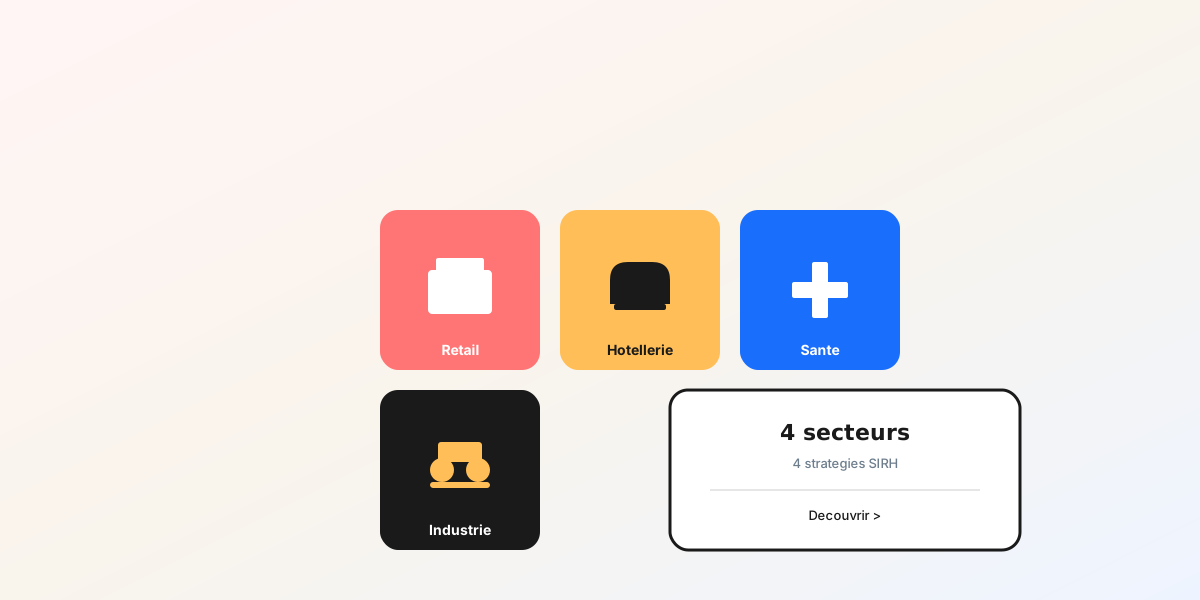
Four industries stand out for their unique needs.
- Retail: long opening hours, multi-store, Sunday and holiday management, fine-grained scheduling based on foot traffic.
- Hospitality and restaurants: split shifts, seasonal peaks, extra staff, brigade management.
- Healthcare: 24/7 service continuity, on-call and standby, working time equivalences.
- Manufacturing: 3-shift or 5-shift teams, regulated breaks, production scheduling.
The benefit of an industry-specific HRIS
An HRIS designed for a specific industry natively integrates its constraints. Initial setup is reduced by 30 to 60%, the interface vocabulary speaks directly to users, and the vendor closely tracks industry-specific regulatory changes. Change management is also smoother.
When to prefer a generalist HRIS
Multi-business groups, mid-sized companies seeking to standardize on a single platform and companies with a strong internal configuration team can legitimately prefer a generalist HRIS. The extra setup cost is then offset by platform unity and shared costs.