
In short:
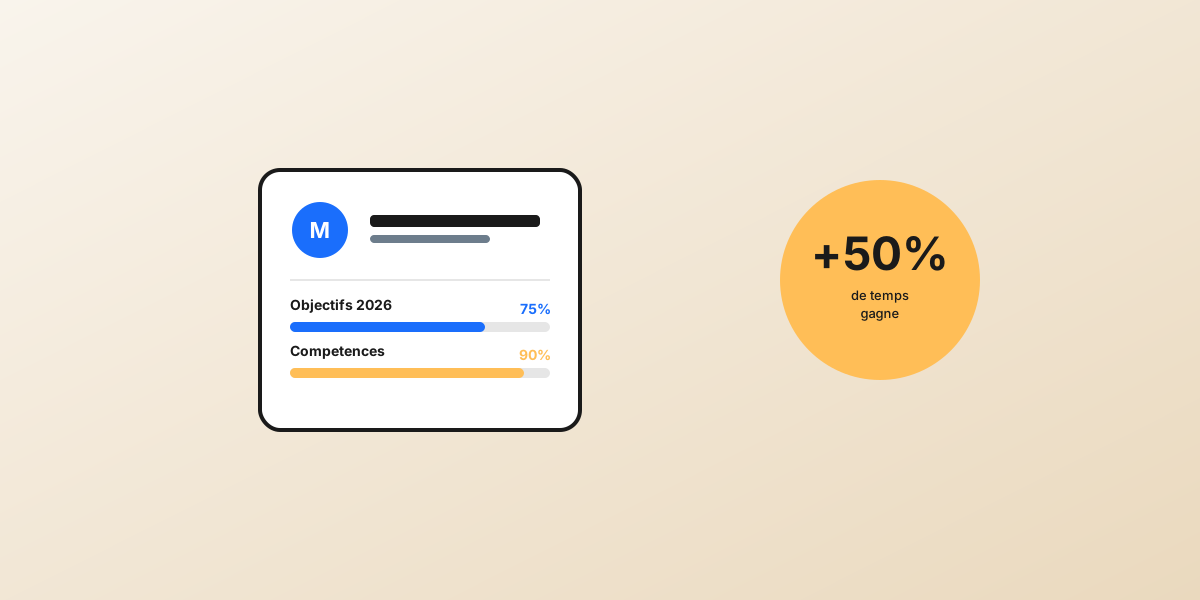
- Digitizing reviews saves managers 30 to 50% of time on average.
- Dedicated software ensures compliance with mandatory career reviews every two years.
- Collected data feeds workforce planning and training plans.
- Specialized talent solutions offer features complementary to the reviews modules of generalist HRIS.
Why digitize annual reviews
Annual and career reviews are still often managed through Word templates exchanged by email, with no centralization or tracking. This approach complicates HR oversight, weakens legal compliance and wastes managers’ and HR teams’ time. Dedicated software changes the game entirely.
Features to expect
Solid review software offers customizable templates, e-signature, commitment tracking and alignment with goals and skills. Advanced solutions integrate continuous feedback, OKR management and development plan tracking.
- Templates configurable by employee group
- Validation workflow manager / HR / employee
- E-signature of review records
- Commitment and goal tracking
- HR dashboards by team and site
Benefits for workforce planning
Data from reviews directly feeds workforce planning. Workforce views by role, identification of training needs, detection of high potentials: the software turns an administrative obligation into a strategic management lever.
Generalist HRIS or specialized solution
Generalist HRIS often include a reviews module. Dedicated talent platforms offer complementary features: 360 feedback, LMS integration, internal mobility alignment. The choice depends on HR maturity and budget.
Frequently asked questions
Why digitize annual reviews?
Digitizing annual reviews centralizes records, tracks commitments and feeds workforce planning. It also reduces administrative load on managers and helps stay compliant with mandatory career conversations.
Which software to manage performance reviews?
Generalist HRIS solutions offer a reviews module, while dedicated talent platforms add complementary features: customizable templates, continuous tracking, alignment with goals and skills.
What's the difference between annual and career reviews?
The annual review evaluates performance and sets goals. The career review, mandatory every two years in France, focuses on career path and growth opportunities. A solid software handles both separately.