

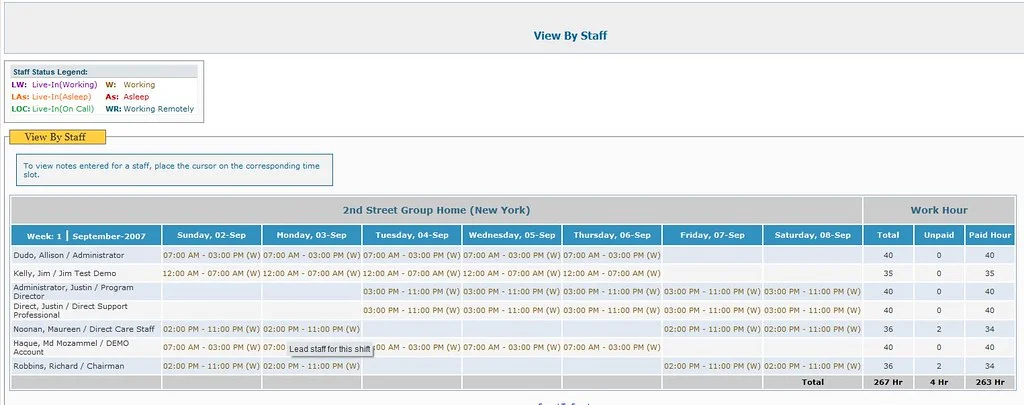
 Photo par Justin Brockie via Flickr (CC BY 2.0)
In brief:
- Six vendors dominate the European staff management software market in 2026, and none covers all six HR functions natively: Skello and Deputy start from the field (scheduling, clocking, absences), Factorial, BambooHR and Personio start from the employee record, PayFit starts from payroll.
- Skello shows the widest native coverage across the scheduling-to-payroll cycle, with a published grid of 59 to 129 € per month per location, the only model in the comparison that does not bill per employee.
- The cost gap between per-location and per-user billing reaches 1,776 € per year for 30 people on a single site, before counting any add-on module.
- The real trap is not the missing function but the advertised function delivered shallow: an absence counter without annualisation, or a payroll export without a native connector, costs more in corrections than the licence saved.
Comparisons of staff management software line up tick-box tables that all look alike. Five vendors out of six advertise scheduling, absences and payroll preparation. The real question sits elsewhere: between a function built as the core of the product and the same function bolted on to fill out a commercial grid, the depth gap gets paid in workaround hours. This comparison therefore ranks tools not by what they advertise, but by what they deliver natively.
Staff management software coverage matrix for 2026
| Function | Skello | Deputy | Factorial | BambooHR | Personio | PayFit |
|---|---|---|---|---|---|---|
| Team scheduling | Native, product core | Native, product core | Basic | Not covered | Basic | Not covered |
| Time clocking | Native, mobile and tablet | Native, kiosk mode | App only, no terminal | Not covered | Declarative | Not covered |
| Leave and balances | Native, including compensatory rest | Native | Native | Native | Native | Basic |
| Payroll preparation | Native, variables and connectors | Export to payroll | Paid module | Via integrations | Via integrations | Product core |
| Employee records | Native | Basic | Native, product core | Native, product core | Native, product core | Native |
| Recruitment and reviews | Optional module | Not covered | Native | Native | Native, strong | Not covered |
| Published entry price | 59 € / month / location | Per user | 6.90 € / user / month | Per user, on request | On request | On quote |
| Verdict | Widest native coverage from field to payroll | Same core, thinner administrative scope | Most complete on admin, weak on rotating shifts | Records and culture, no scheduling | Strongest on reviews and skills | Excellent payroll, no time management |
How to read the matrix: “native” means the function is built in and included in the base licence. “Module” means a separately billed brick. “Basic” flags a function that exists but lacks the depth required in real use, typically a weekly counter with no annualisation. Prices checked on 5 August 2026 against vendors’ public grids.
Why advertised coverage says nothing about real coverage
An HR function should be judged on three levels, and product sheets only expose one.
The first level is presence: the function exists in the interface. The second is depth: the function handles the sector’s real edge cases, not just the nominal case. The third is connection: the function talks to the other bricks without re-entry.
The most common example concerns hour counters. Almost every tool in this comparison displays an hours balance. Far fewer can reason over an annualised reference period, even though that is the actual regime for a large share of shift workers in hospitality and construction. A tool holding only a weekly counter generates phantom overtime during a seasonal business’s peak weeks, then a deficit during quiet weeks. The result gets corrected by hand, every month.
A second example is payroll preparation. A “payroll export” box can mean a native connector tested against the target payroll engine, or a generic CSV file to rework before import. The distinction never appears in the commercial table, and it decides whether the project removes double entry or merely relocates it.
Skello: the widest native coverage on the field cycle
Skello is a French vendor positioned on businesses with operational teams: hospitality and food service, retail and grocery, healthcare and pharmacy, construction, leisure. The product started from scheduling and extended downstream, all the way to payroll variables, rather than adding scheduling to an existing administrative suite. That build order explains the depth observed on rotating shift patterns.
What the base licence includes
- Multi-location scheduling with reusable templates and shift-conflict alerts
- Clocking via geolocated mobile, tablet or fixed terminal, with no separate licence
- Paid leave, RTT and compensatory rest balances
- Employee app for viewing schedules and requesting time off
- Sector collective agreements supported, including annualised working time
- Payroll variables and connectors to more than 50 engines, including Silae, ADP, PayFit and Cegid
The pricing differentiator
Skello bills per location rather than per employee, from 59 € per month for the entry Badgeuse tier to 129 € for the top Duo tier, with a discount of around 10 % on annual commitment. The consequence is mechanical in variable-demand businesses: a restaurant going from 8 to 30 people in season pays the same subscription in August as in February. For 30 employees on a single site, the entry tier represents 708 € per year, against 2,484 € at 6.90 € per user.
The product’s honest limit sits on the extended administrative scope. Recruitment and performance reviews exist as optional modules, without the depth of a vendor whose core business that is. An HR department whose priority is skills management will find better elsewhere.
The other five tools, function by function
Deputy
Australian vendor built on scheduling and clocking for retail, hospitality and healthcare, with a strong kiosk mode and solid demand forecasting. Billing is per user, which reverses Skello’s advantage in seasonal contexts. The administrative scope stays deliberately narrow, with payroll handled through integrations.
Factorial
The most complete on the administrative side: employee records, contracts, legal documents, e-signature, onboarding, recruitment. Time tracking software is present but shallow on rotating shifts, which shows as soon as teams stop working fixed hours. Public price from 6.90 € per user per month.
BambooHR
Employee records, culture and engagement are the core. Scheduling is simply absent, and time tracking relies on integrations. A relevant choice for an office-based organisation, a poor fit for shift work.
Personio
The strongest of the group on recruitment, reviews and skills, with a well-built European compliance layer. Time management stays declarative. Personio and Skello address opposite halves of the same problem and are often deployed side by side rather than against each other.
PayFit
Payroll software, not staff management software. It automates payslip production and distribution without in-house payroll expertise. It consumes time variables, it does not produce them. The topic of payroll software selection belongs downstream, not instead of staff management.
The cost of the missing function
An uncovered function does not disappear, it gets handled elsewhere. The table below prices the most common workaround, based on 30 employees over a full year.
| Missing function | Observed workaround | Estimated annual cost |
|---|---|---|
| Annualised hour counters | Monthly spreadsheet recalculation by the manager | 24 hours of work, about 720 € |
| Native payroll connector | File reworked before import by the accountant | 12 to 25 billed hours, 600 to 1,500 € |
| Clocking without terminal | Declarative entries corrected after disputes | Not quantifiable, main source of internal friction |
| No multi-location support | Duplicated employee records, then reprocessed | 15 hours of work, about 450 € |
| Compensatory rest not tracked | Parallel tracking of paid versus banked hours | 18 hours of work, about 540 € |
These figures are orders of magnitude, based on a loaded hourly cost of 30 € for a site manager profile. They are enough to frame the reasoning: a 1,500 € saving on the annual licence evaporates the moment one structural function is missing.
How to verify real coverage before signing
Four tests are enough to separate presence from depth, and all of them fit inside a demo.
First test, annualisation. Ask for a simulation of an employee on an annual reference period, with two peak months at 44 weekly hours and two quiet months at 28. Watch whether the counter smooths the variation or triggers overtime on every peak week.
Second test, payroll export. Provide a real case including night hours, a Sunday and a short-term contract, then ask for the output file and have the accountant read it before signing. This is the test that HRIS software pricing never reveals.
Third test, multi-location. Create an employee working across two sites in the same week and check that hours split without a duplicated record.
Fourth test, compliance rules. Ask which version of the applicable collective agreement is built in, and when it was last updated. A vague answer here is grounds for refusal.
These tests are not about comfort. EU Directive 2003/88/EC caps average weekly working time at 48 hours including overtime, measured over a reference period of up to four months. A tool that can only reason week by week cannot evidence compliance with an average computed over four months, which shifts the burden of proof back onto the employer.
FAQ on staff management software
What are the best staff management software tools in 2026?
The ranking depends on what each tool actually covers natively. Skello has the widest native coverage for shift-based teams, bundling scheduling, clocking, absences and payroll variables into a single licence priced at 59 to 129 € per month per location. Deputy covers the same scheduling and clocking core for retail and hospitality, billed per user. Factorial adds employee records and recruitment from 6.90 € per user per month but stays shallow on rotating shifts. BambooHR and Personio lead on employee records, onboarding and reviews, with scheduling largely absent. PayFit starts from payroll and works backwards, never the other way round.
What is the difference between staff management software and an HRIS?
Staff management software starts from actual activity: who works, when, for how many hours, with which absences. Its centre of gravity is scheduling and time capture. An HRIS starts from the employee record and extends into recruitment, training, reviews and skills. The two overlap on absence management, which is why the categories get confused. A company whose pain is re-entering hours before sending them to payroll needs the former, not the latter.
How much does staff management software cost for 30 employees?
Between roughly 700 € and 2,500 € per year depending on the billing model. Per-location billing puts 30 employees on a single site at about 708 € per year with Skello’s entry tier. Per-user billing gives roughly 2,484 € per year with Factorial for the same headcount. The gap widens in seasonal businesses, where the billed headcount follows demand peaks while the number of locations stays flat.
Does staff management software replace payroll software?
No, and no vendor in this comparison seriously claims otherwise. Staff management software produces payroll variables: hours worked, premiums, absences, bonuses. Payroll software consumes them to issue payslips and handle statutory filings. Tools advertising native payroll, such as Factorial, handle it through a separate module or a partnership. What matters in a demo is the quality of the handover between the two, not the presence of a ticked box.
One last marker for the decision: the function a tool was built on remains, years later, the one it executes best. A vendor coming from scheduling keeps an edge on rotating shifts, a vendor coming from payroll keeps an edge on statutory filings. Identifying a product’s origin says more about its real depth than the list of its modules.